
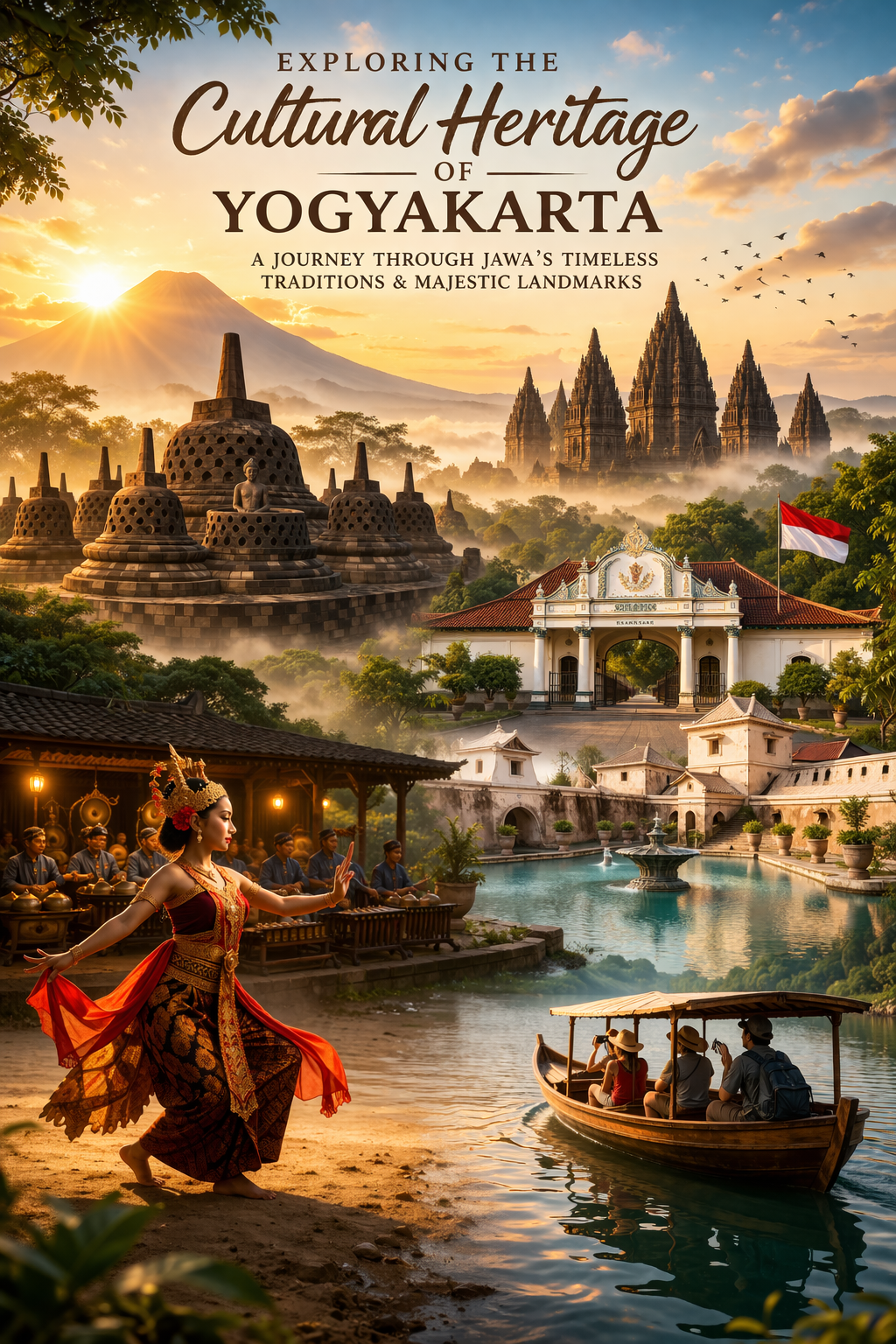
Exploring the Cultural Heritage of Yogyakarta


Yogyakarta—often called Jogja—is widely regarded as the cultural heart of Java. Unlike many modern cities, it has preserved its traditions, arts, and royal heritage while embracing tourism and creativity. From ancient temples to living traditions, Yogyakarta offers a deeply immersive cultural experience that goes far beyond sightseeing.
This guide explores the rich cultural heritage of Yogyakarta and why it remains one of Indonesia’s most meaningful destinations.
🏛️ The Living Royal Heritage
At the center of Yogyakarta’s cultural identity lies the Keraton Yogyakarta, the royal palace of the Sultan. Unlike historical palaces that serve only as museums, the Keraton is still an active residence and cultural hub.
What makes it unique:
- Home to the Sultan and royal family
- Daily traditional performances (dance, gamelan music)
- Preserved Javanese architecture and philosophy
Visitors can witness how royal traditions continue to shape daily life in Jogja.
🛕 Ancient Temples & Spiritual Legacy
Borobudur Temple


The world’s largest Buddhist temple, Borobudur is a masterpiece of spiritual architecture. Built in the 9th century, it represents the journey toward enlightenment through its intricate reliefs and stupas.
Prambanan Temple


A stunning Hindu temple complex dedicated to the Trimurti (Brahma, Vishnu, Shiva), Prambanan showcases the grandeur of ancient Javanese civilization.
Cultural highlight:
- The Ramayana Ballet, a traditional dance drama performed with the temple as a backdrop
🎭 Traditional Arts & Performances


Yogyakarta is a living stage for traditional arts that have been passed down for generations.
Must-experience cultural arts:
- Wayang Kulit (Shadow Puppetry): Storytelling through intricate leather puppets
- Gamelan Music: A traditional ensemble with hypnotic rhythms
- Javanese Dance: Graceful movements rich in symbolism
These performances are not just entertainment—they are deeply connected to spirituality and philosophy.
🧵 Batik: The Soul of Javanese Craft
Recognized by UNESCO as an Intangible Cultural Heritage, batik is an essential part of Yogyakarta’s identity.
Where to explore:
- Batik workshops in the city
- Local markets like Malioboro Street
What makes batik special:
- Each pattern tells a story
- Handmade using traditional wax techniques
- Symbolic meanings tied to Javanese beliefs
Visitors can even join workshops to create their own batik piece.
🏰 Hidden Royal Sites
Taman Sari Water Castle


Once a royal garden and retreat, Taman Sari features elegant pools, underground tunnels, and unique architectural designs blending Javanese and European influences.
🍛 Culinary Heritage


Yogyakarta’s culture is also deeply reflected in its cuisine.
Must-try dishes:
- Gudeg – Sweet jackfruit stew, Jogja’s signature dish
- Sate Klathak – Unique satay grilled on iron skewers
- Bakpia – Sweet filled pastry, perfect for souvenirs
🌿 Philosophy & Way of Life
What truly sets Yogyakarta apart is not just its physical heritage, but its philosophy of life.
Key values include:
- Harmony between humans, nature, and spirituality
- Respect for tradition and elders
- Balance between modern life and cultural preservation
This philosophy is reflected in architecture, ceremonies, and daily interactions.
✨ Final Thoughts
Exploring the cultural heritage of Yogyakarta is like stepping into a living museum—one where traditions are not only preserved but actively practiced.
From the royal elegance of the Keraton Yogyakarta to the spiritual grandeur of Borobudur Temple and Prambanan Temple, every experience reveals a deeper layer of meaning.
If you’re seeking a destination that offers authentic culture, history, and soul, Yogyakarta is truly unmatched.